A low credit score can feel like a locked door, especially if you've already been turned down once. But a low score doesn't mean you're out of options.
It changes what you qualify for and which lenders are worth applying to, but it doesn't take you out of the picture entirely. Here's what a low credit score actually means for approval, what Zenvy Financial and other lenders look at besides that number, and what still works in your favor even if a previous application didn't go the way you hoped.
What Counts as a "Low" Credit Score
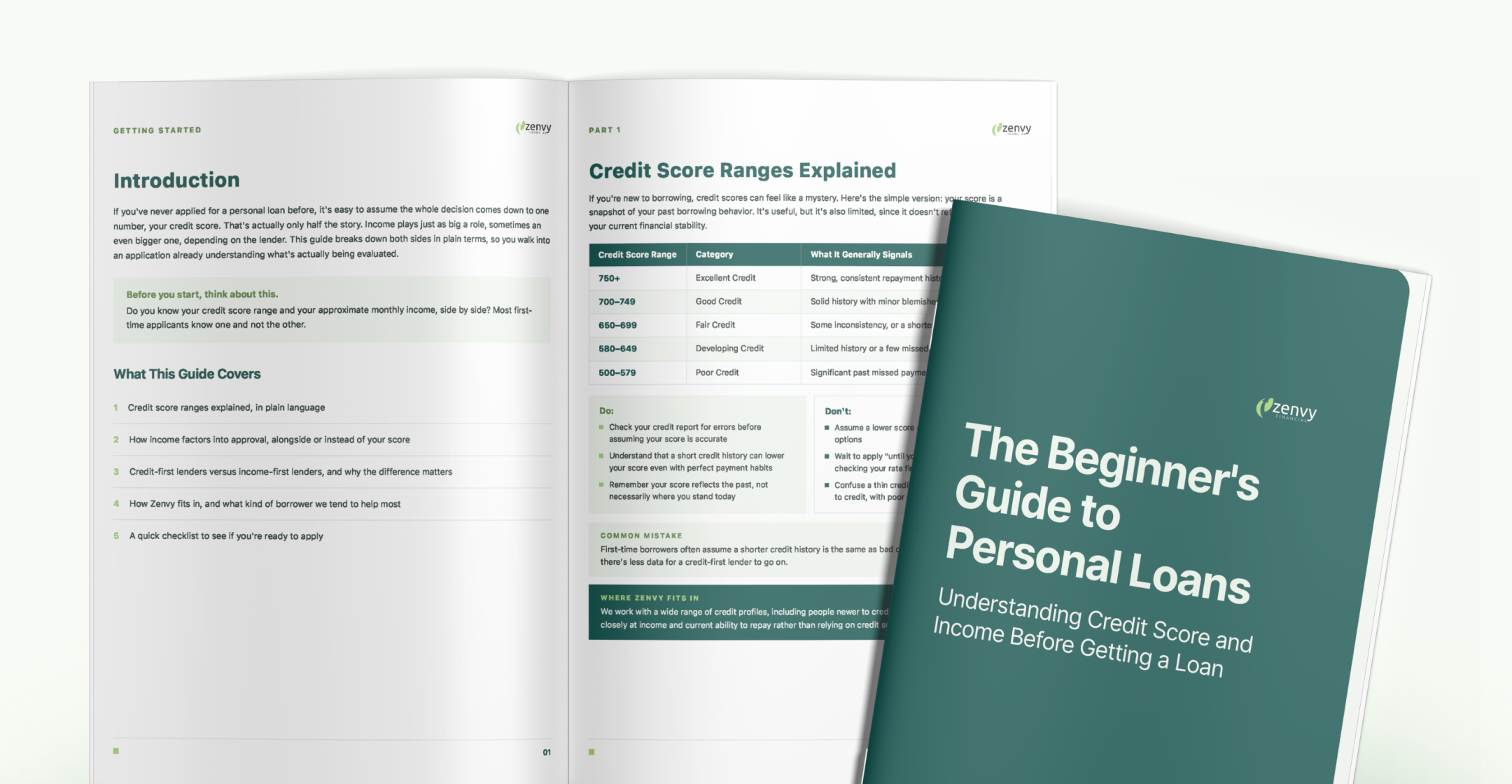
Credit scores generally fall into these ranges: 750 and above is excellent credit, 700 to 749 is good credit, 650 to 699 is fair credit, 580 to 649 is developing credit, and 500 to 579 is considered poor credit. Scores below 650 are usually where borrowers start seeing fewer options with traditional, credit-first lenders.
That doesn't mean no options though, it just depends on which lender you apply with and what else they look at. Some lenders lean almost entirely on credit score. Others, like Zenvy Financial, start with income and current ability to repay, which can open a path to approval even when a credit score alone might not clear a traditional lender's bar.
What a Low Score Actually Changes
A lower credit score usually affects three things. Approval odds, since some lenders turn down applications below a certain score no matter what else is going on, while others don't use a cutoff like that at all. Interest rate, since even if you're approved, a lower score usually means a higher rate as lenders price loans based on risk. And loan amount, since lenders may approve a smaller amount for borrowers with lower scores, especially on a first loan. What a low score doesn't automatically decide is whether you'll get approved at all, that comes down to how the lender evaluates applications.
Current Income
Whether you can actually afford the monthly payment right now.
Employment Stability
How steady your income has been over time.
Existing Financial Obligations
How much of your income is already spoken for.
Banking Activity
Your account history and overall cash flow.
What Still Works in Your Favor
Even with a low score, a few things can strengthen your application. Steady income, even if it's modest, shows a lender you can handle a fixed monthly payment. A reasonable amount requested is generally less risk for a lender to approve. A clean recent payment history tends to carry weight, even if your overall score is still low. And applying with an income-first lender like Zenvy Financial shifts the focus away from the score itself entirely.
We Start With Your Income
That tells us more about what you can afford right now than your credit history alone.
We Look at Your Full Picture
Including job stability and existing obligations, instead of using a hard credit score cutoff.
No Impact to Check
Checking your rate won't affect your credit score, so there's no risk in seeing where you stand.
Zenvy Financial: Built for Scores That Don't Tell the Full Story
If your credit score doesn't reflect where you actually stand financially today, Zenvy Financial gives you a real path to approval based on your income and current situation, not just a number from your past.
How Zenvy Financial Looks at a Low Score Differently
Checking your rate won't affect your credit score, so you can see exactly where you stand before deciding on anything, even if your last application elsewhere ended in a decline.
A low credit score often gets treated like the whole story, but it rarely tells a lender everything they need to know. Zenvy Financial was built around that gap. Instead of leading with your score, we start by looking at what you're earning now and what you can actually afford to repay each month. That doesn't mean your credit history gets ignored, it's still part of the picture, but it's not the deciding factor on its own. If you have a lower score but steady income and manageable expenses, you may still have a real shot at approval with us, even if another lender has already turned you down.